SEO vs Google Ads: Which One Gives Better ROI?
SEO vs Google Ads: which gives better ROI? Compare speed, cost, risks, and long-term value, and learn when to choose SEO, when to use PPC management, and how combining both can bring more leads for your business.
That one answer explains most of the SEO vs Google Ads debate. Both can bring in customers, but they behave very differently, and the better ROI depends on your timeline, budget, and business. This guide breaks down how each one works, what they really cost, and how to decide where your money should go.
The Basic Difference
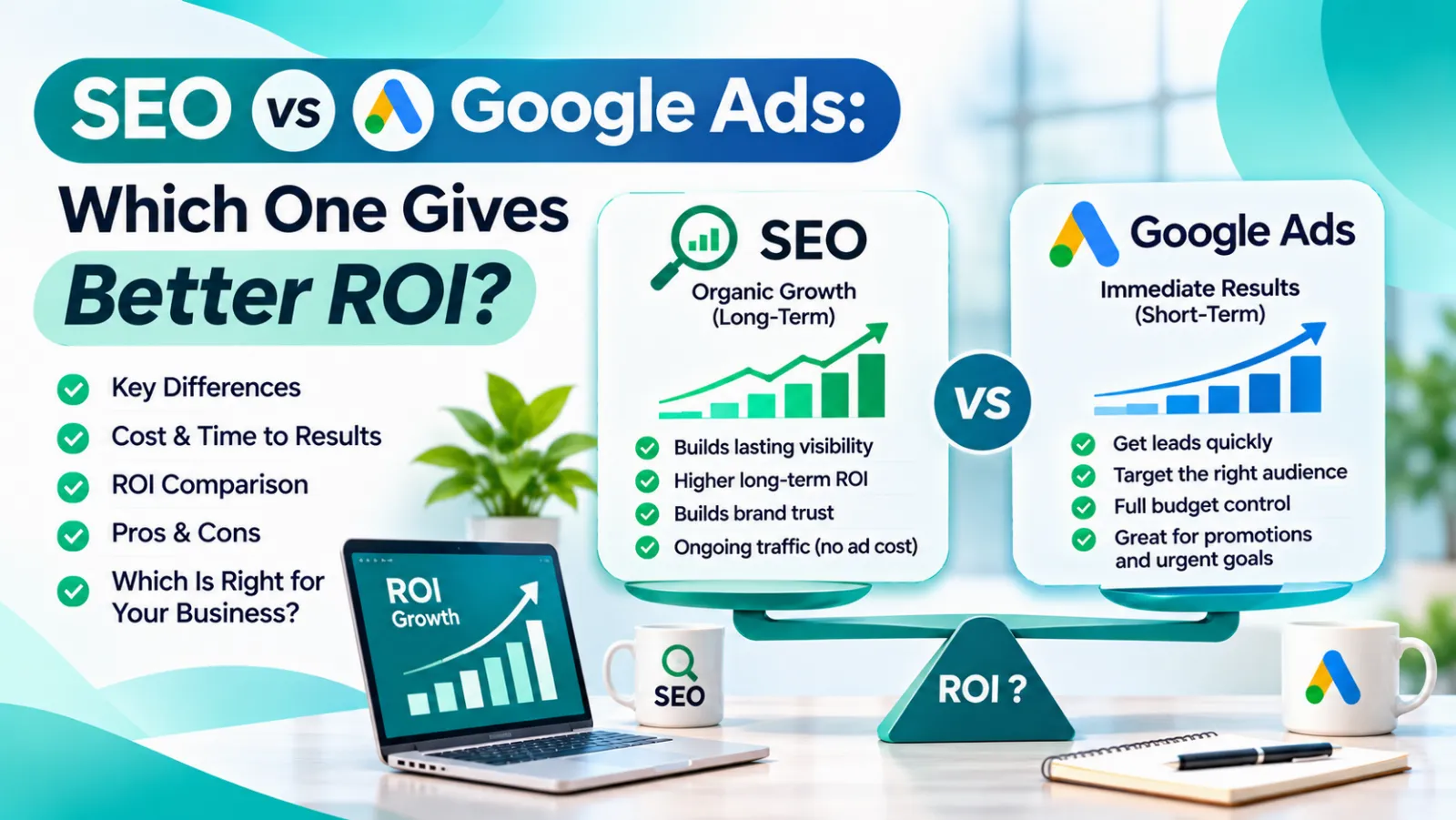
SEO (Search Engine Optimization) is the work of improving your website so it ranks higher in Google’s free, organic results. You don’t pay per click. You invest in content, technical fixes, and authority, and the traffic builds over time.
Google Ads is paid advertising. You bid on keywords, your ad appears at the top of the results, and you pay when someone clicks. The moment you turn it off, the traffic stops.
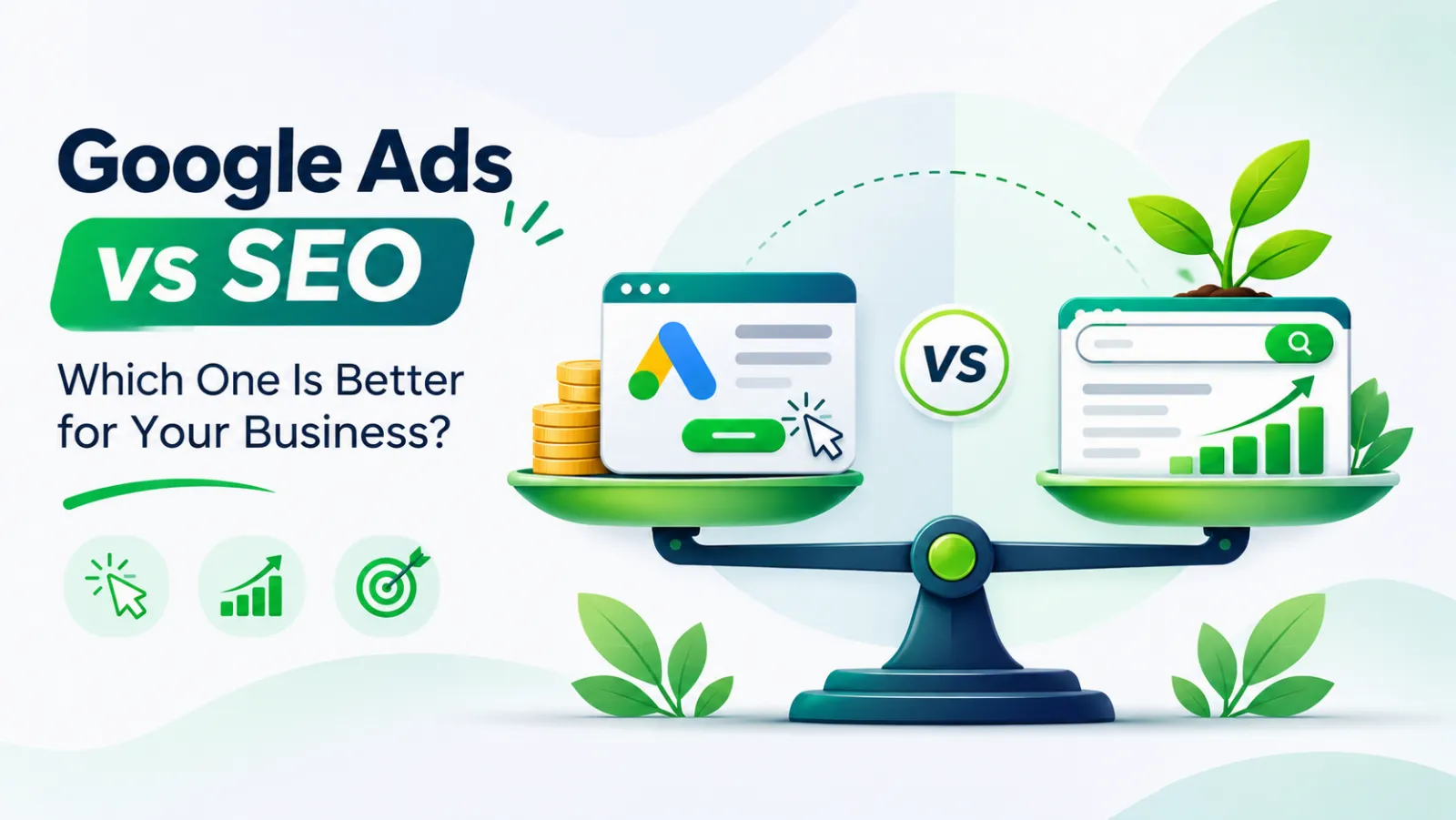
Think of it like this. SEO is like buying a shop. It takes time and money upfront, but it’s yours. Google Ads is like renting a stall at a busy market. You get customers right away, but you pay rent every month.
How Fast Do You Get Results?
Google Ads: Fast. Once your campaign is approved, you can start getting clicks and leads within days. That makes it ideal for new businesses, seasonal offers, or anyone who needs customers now.
SEO: Slow and steady. In most cases, it takes a few months before you see meaningful movement, and longer in competitive industries. Early months often feel like planting seeds with no visible harvest.
If you need leads this month, SEO alone won’t deliver. If you’re thinking about the next two or three years, SEO becomes very attractive.
Cost Comparison
Neither has a fixed price, but the cost structure is different.
Google Ads costs:
- Ad spend: the money you pay Google for clicks
- Management fees: what an expert or agency charges to run the campaigns
- Landing pages and tracking setup
SEO costs:
- Content creation and optimization
- Technical improvements to your website
- Link building and local listings
- Ongoing monitoring and updates
With ads, your costs rise as traffic rises. Every extra click costs money. With SEO, once a page ranks well, additional traffic doesn’t cost you more per visit. That’s why SEO tends to get cheaper per lead over time, while ads stay at a relatively constant price per lead.
Which One Gives Better ROI?
Here’s the honest answer: it depends on the time frame.
In the short term (first 1 to 3 months): Google Ads usually wins. You’re getting leads while SEO is still warming up.
In the long term (12 months and beyond): SEO often delivers better ROI. A page that ranks well can bring in leads for years without a per-click fee. The cost of one good blog post or service page can be spread across thousands of visits.
But there’s an important catch. SEO ROI is not guaranteed. Rankings can drop, competitors can outrank you, and algorithms change. Meanwhile, Google Ads ROI is easier to predict once you know your cost per lead and your close rate.
So the real question isn’t “which is better?” but “which fits my situation right now?”
When Google Ads Is the Better Choice
Choose ads first if:
- You need leads quickly
- You’re launching a new product, service, or business
- You’re running a time-limited promotion or event
- Your website is brand new and has no authority yet
- You want to test which keywords and offers convert before investing in content
- Your service is high-value, so even expensive clicks pay off
For example, a law firm or a solar installer may pay a lot per click, but one new client can be worth far more than the ad spend.
When SEO Is the Better Choice
Choose SEO first if:
- You have a longer runway and can wait for results
- Your industry has very expensive ad clicks
- Your customers research a lot before buying
- You want a steady, lower-cost flow of leads over time
- You want to build trust and authority in your market
Many people trust organic results more than ads, and a strong organic presence supports every other marketing channel. If you’re ready to invest in this long-term asset, you can see how GlanceTechy’s SEO services help businesses build lasting visibility.
The Hidden Risks of Each
Both options have downsides that don’t always get mentioned.
Risks with Google Ads:
- Wasted spend if tracking or targeting is poor
- Rising costs as competition grows
- Total dependence on budget, since leads stop when spending stops
- Click fraud and low-quality clicks, especially without careful monitoring
Risks with SEO:
- Slow results can test your patience
- Algorithm updates can change rankings
- Hard to guarantee specific outcomes or timelines
- Quality depends heavily on who does the work, and some providers use risky shortcuts
This is why good PPC management and honest SEO work both matter. A badly run campaign of either type can waste a lot of money.
Why the Best Strategy Is Usually Both
Most successful businesses don’t pick one forever. They combine them, and the two channels actually help each other.
Here’s how:
- Use ads for quick wins. Get leads and revenue while SEO builds.
- Use ad data to guide SEO. Keywords that convert well in Google Ads often make excellent targets for organic content.
- Use SEO to reduce ad dependence. As rankings grow, you can lower ad spend on keywords you now rank for naturally.
- Cover more of the results page. Showing up both in ads and organic results builds trust and takes up more space.
- Retarget visitors. Organic visitors who didn’t convert can be brought back with ads.
A common path looks like this: start with ads to generate early leads, invest in SEO at the same time, and gradually shift more budget to organic as rankings improve.
How to Measure ROI for Each
Whatever you choose, measuring properly is what separates good decisions from guesses. Track these numbers:
- Cost per lead: How much you spend to get one inquiry
- Cost per customer: How much you spend to win one paying client
- Conversion rate: The share of visitors who become leads
- Customer lifetime value: How much a customer is worth over time
- Return on investment: Revenue generated compared to what you spent
Don’t judge by clicks or traffic alone. A thousand visitors who never contact you are worth less than ten who do.
For SEO, give it enough time before judging. For ads, review your numbers weekly in the beginning and adjust.
A Simple Way to Decide
Ask yourself these questions:
- How soon do I need leads? If it’s urgent, start with ads.
- How competitive and expensive are clicks in my industry? If very expensive, lean toward SEO.
- What’s my budget? A small budget might go further with SEO and local optimization. A larger one allows both.
- How valuable is each customer? High value supports paid ads more easily.
- Is my website ready? If it’s slow or unclear, fix it first, or both channels will underperform.
When to Get Professional Help
Both channels reward expertise. A well-run campaign can double your results, while a poorly run one burns money quietly. If you don’t have the time or experience, working with a team that offers both SEO services and PPC management can save you months of trial and error.
Look for clear reporting tied to leads and sales, honest timelines, transparent pricing, and full ownership of your accounts. If you’d like help deciding the right mix for your business, you can learn more about GlanceTechy and how we support growing brands.
Final Thoughts
So, SEO vs Google Ads: which gives better ROI? Google Ads usually wins on speed and predictability. SEO usually wins on long-term cost and compounding value. The smartest businesses treat them as partners, not rivals.
Start with your goals, timeline, and budget. Use ads when you need momentum, build SEO for lasting growth, and track real customers instead of vanity numbers. Do that consistently, and your marketing will work harder with every passing month.