Best AI Tools Every Digital Marketer Should Use in 2026
Discover the best AI marketing tools for 2026, from ChatGPT and Gemini AI to SEO, design, and marketing automation platforms. Learn how to choose the right tools, build a simple starter stack, and avoid common mistakes.
If that sounds familiar, you’re not alone. New AI marketing tools launch almost every week, and it’s easy to feel like you’re falling behind. The truth is you don’t need dozens of them. You need a handful that solve real problems in your workflow.
This guide covers the main categories of tools worth knowing in 2026, which ones to look at first, and how to use them without losing the human touch your audience trusts.
How to Choose the Right Tool (Before You Look at Any)
Before you sign up for anything, ask three questions:
- What task eats most of my time? Writing, reporting, design, or follow-ups?
- Does it fit into tools I already use? A tool that connects to your email platform or CRM is far more useful than one that sits alone.
- Can I measure the result? If you can’t tell whether it saves time or improves results, you won’t know if it’s worth paying for.
Start with the biggest bottleneck. Everything else can wait.
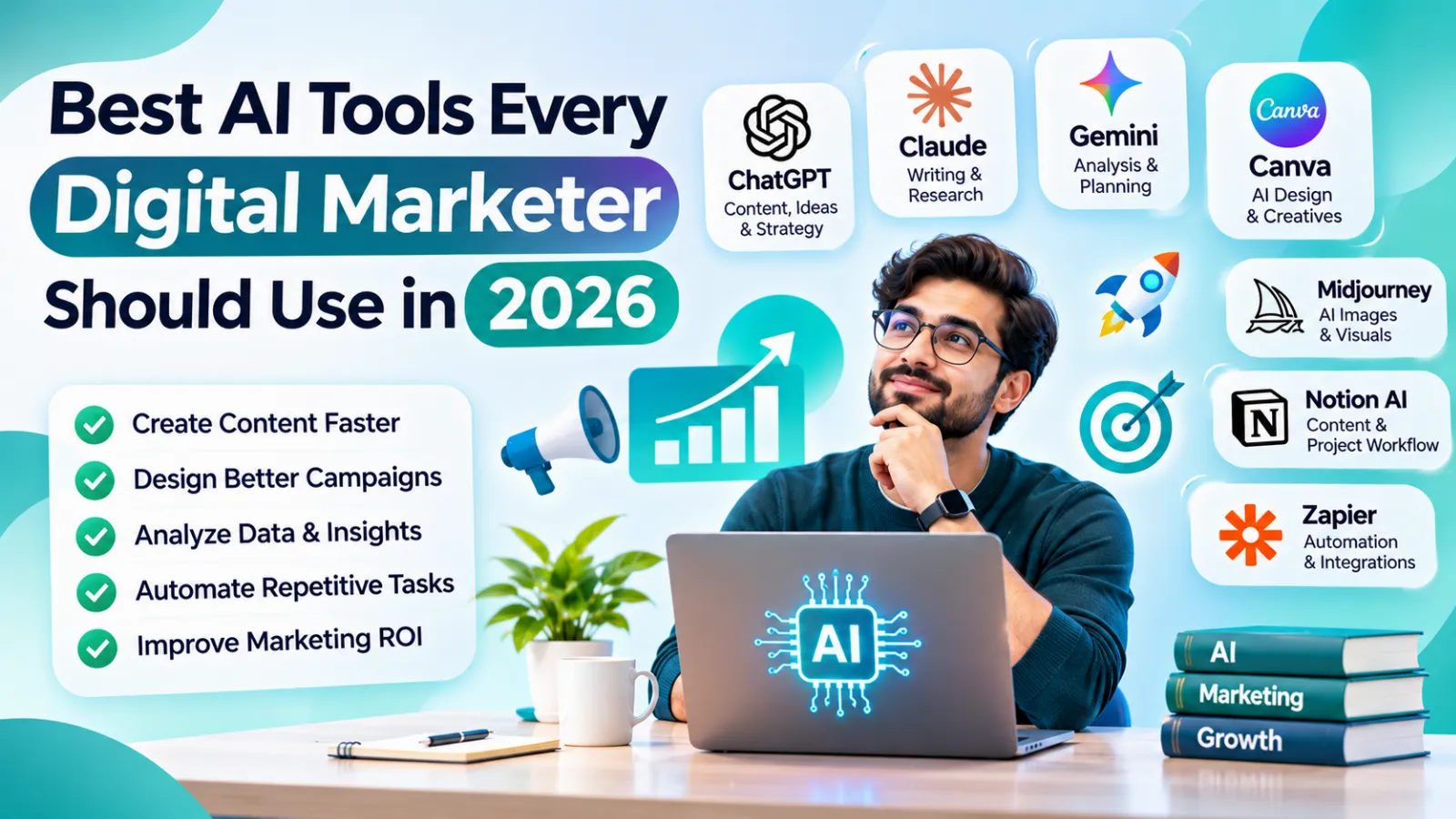
1. AI Assistants: ChatGPT, Gemini, and Claude
If you only add one type of tool, make it a general-purpose AI assistant. These are the Swiss Army knives of modern marketing.
ChatGPT is probably the most widely used. Marketers use it to brainstorm campaign ideas, draft email subject lines, write ad copy variations, outline blog posts, and summarize customer feedback.
Gemini AI from Google is a strong choice if you already live in Google’s ecosystem. It works well alongside Gmail, Docs, and Sheets, which makes it handy for drafting, summarizing long documents, and organizing data.
Claude is another capable option, especially for longer documents and careful, natural-sounding writing.
You don’t have to pick only one. Many marketers try two or three on the same task and keep whichever gives the best results for their style. A few tips make a big difference:
- Give detailed instructions: audience, tone, goal, and length
- Share examples of your brand voice
- Always edit the output and verify facts, numbers, and names
- Never paste confidential client or customer data into public tools
2. AI Writing and Content Tools
Beyond general assistants, there are tools built specifically for marketing content, such as Jasper, Copy.ai, and Writesonic. They offer templates for ads, product descriptions, landing pages, and social captions, and some can store your brand voice so the output stays consistent.
These are useful for speed, but they come with a warning. If everyone uses the same prompts, everyone ends up sounding the same. Treat AI as a first-draft machine. Then add your own stories, examples, and opinions. That’s what makes content worth reading.
3. AI Tools for SEO
SEO tools have become much smarter. Platforms like Semrush, Ahrefs, Surfer SEO, and Clearscope use AI to suggest keywords, find content gaps, analyze competitors, and recommend how to improve a page.
Here’s how marketers use them in practice:
- Finding questions your customers ask that your site doesn’t answer yet
- Checking whether a draft covers a topic thoroughly
- Spotting technical issues like slow pages or broken links
- Tracking rankings and seeing which pages gain or lose traffic
Still, tools only show you the data. Knowing what to do with it takes experience. If you’d like expert help turning those insights into rankings, you can see how GlanceTechy’s SEO services support businesses that want steady organic growth.
4. AI Design and Video Tools
Not every business has a designer on staff, and AI has made quick visuals much easier.
- Canva includes AI features for generating layouts, resizing designs, and creating images and presentations
- Adobe Firefly helps with image generation and editing
- CapCut and Descript speed up video editing, captions, and removing filler words from recordings
- Opus Clip and similar tools turn long videos into short clips for Reels and Shorts
These tools are great for social posts, thumbnails, and short videos. Just keep your branding consistent, and avoid images that look obviously artificial, since audiences notice and often trust them less.
5. Marketing Automation Platforms
This is where AI saves the most time for small teams. Modern marketing automation tools do far more than send scheduled emails. Platforms like HubSpot, ActiveCampaign, Mailchimp, and Klaviyo now include AI features that can:
- Pick the best send time for each subscriber
- Score leads based on behavior
- Suggest subject lines and email copy
- Trigger follow-ups when someone views a pricing page or abandons a cart
- Segment audiences automatically
If you want to connect different apps without writing code, tools like Zapier and Make let you build simple workflows. For example: when someone fills out a form, add them to your CRM, send a welcome email, and notify your sales team on WhatsApp or Slack.
Start small. One welcome sequence and one lead follow-up automation will already save hours every week.
6. AI Chatbots and Customer Support Tools
Website chatbots have come a long way. Instead of rigid scripted menus, many now understand natural questions, answer common queries, collect contact details, and book appointments around the clock.
For service businesses, this can mean fewer missed leads at night and on weekends. The key is making it easy to reach a real person when the bot can’t help. Nothing frustrates customers more than being stuck in a loop.
7. AI Analytics and Reporting Tools
Data is useless if you never look at it. Newer analytics tools, including AI features inside Google Analytics and reporting platforms like Looker Studio, can highlight trends, flag unusual changes, and explain performance in plain language.
Use them to answer practical questions: Which channel brings the best leads? Which page do people leave from? What changed last week? Then act on what you find, instead of just collecting dashboards.
8. AI Features Inside Ad Platforms
Google Ads and Meta Ads now include AI-driven bidding, audience suggestions, and automatic creative variations. These can save time, especially for beginners.
But automation only optimizes toward the goal you give it. If your conversion tracking is broken or your landing page is weak, the AI will efficiently waste your budget. Set up proper tracking first, and check the results regularly instead of trusting the system blindly.
A Simple Starter Stack for Small Businesses
You don’t need everything above. Here’s a lean setup that covers most needs:
- One AI assistant (ChatGPT, Gemini, or Claude) for writing, ideas, and research
- One design tool like Canva for social graphics and presentations
- One email or automation platform to handle follow-ups and nurturing
- One SEO or analytics tool to see what’s working
- One workflow connector like Zapier, if you need to link apps
Run this for a month. If it saves you time or brings better results, expand. If not, simplify.
Mistakes to Avoid When Using AI Marketing Tools
- Trusting outputs without checking. AI can invent facts and statistics.
- Publishing generic content. Add your own voice and experience.
- Adopting too many tools at once. Complexity kills consistency.
- Ignoring privacy. Be careful with customer data and follow privacy rules.
- Over-automating. People still want human replies sometimes.
- Choosing by hype. Pick tools by the problem they solve, not the buzz around them.
Tools Change, Skills Last
Features, pricing, and even tool names change quickly in this space, so check each product’s current offering before you commit. What stays valuable is your judgment: understanding your customers, shaping a clear message, and knowing which metrics actually matter. AI speeds up the work, but it can’t replace those skills.
If you’d like help building a marketing system that blends the right tools with a solid strategy, you can learn more about GlanceTechy and how we help businesses grow online.
Final Thoughts
The best AI marketing tools aren’t the newest or the flashiest. They’re the ones that quietly remove the boring, repetitive parts of your day so you can focus on what machines can’t do well: understanding people and building trust.
Start with one assistant like ChatGPT or Gemini AI, add automation where you waste the most time, and measure the results honestly. Small, thoughtful steps will take you much further than chasing every new tool that appears.