How AI Is Changing SEO Jobs and Skills in Digital Agencies
Discover how AI is transforming SEO jobs in digital agencies, automating routine tasks, and increasing the demand for data analytics, technical SEO, AI literacy, and strategic marketing skills.
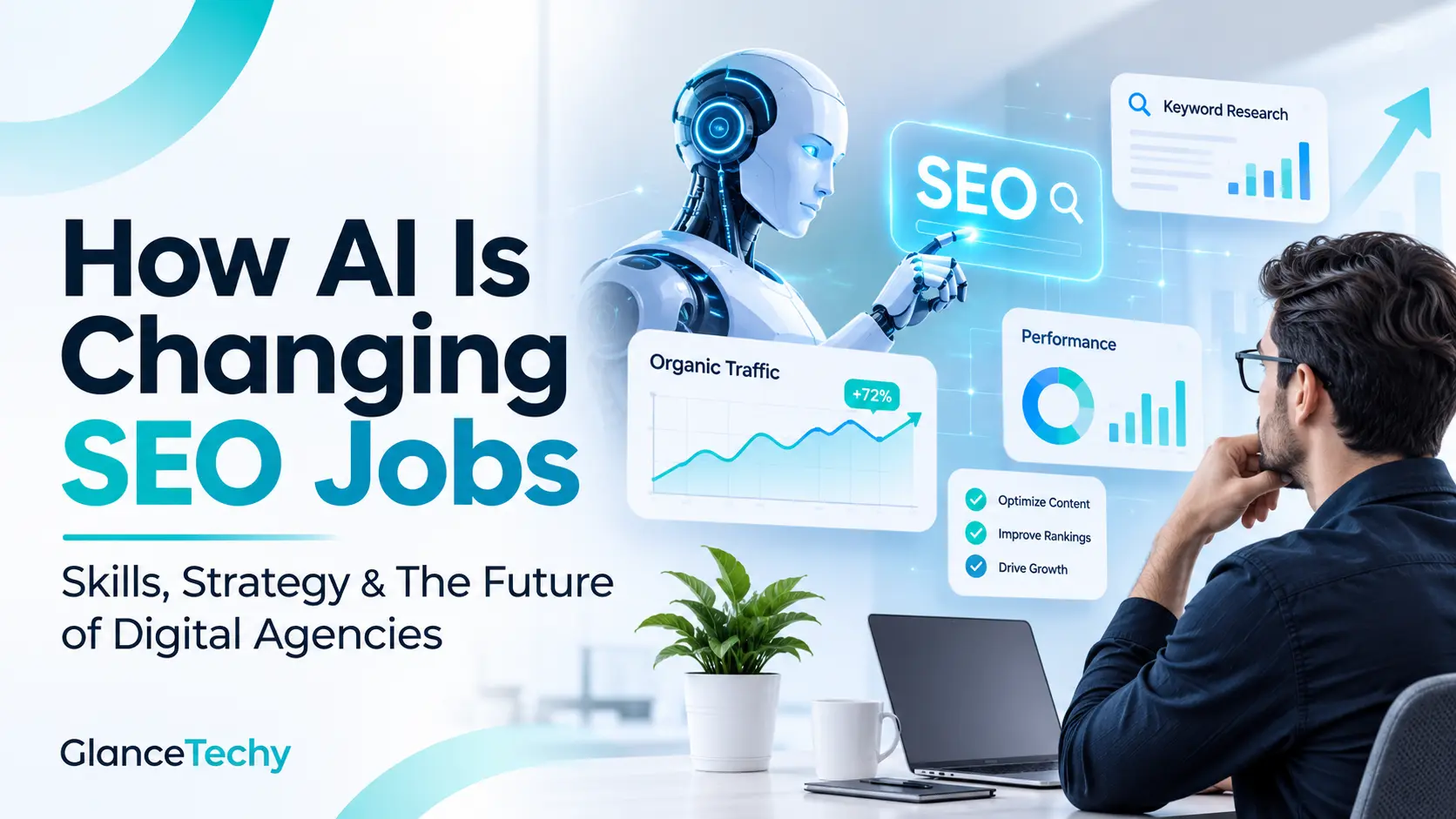
For digital agencies, these advancements create opportunities to improve productivity, streamline workflows, and make more informed marketing decisions. At the same time, they are changing the responsibilities of SEO professionals and the skills employers look for when hiring.
As automation becomes more common, the future of SEO will depend on more than the ability to improve keyword rankings. Professionals will increasingly need to understand search intent, interpret performance data, evaluate AI-generated recommendations, and connect SEO strategies with measurable business outcomes.
For businesses and digital agencies alike, understanding this shift is essential to remaining competitive in an increasingly AI-driven digital landscape.
The Impact of AI on SEO Employment
AI is changing how marketing teams operate, influencing both the tasks employees perform and the types of roles organizations need.
Historically, SEO specialists spent considerable time researching keywords, analyzing competitors, optimizing metadata, reviewing backlinks, preparing reports, and identifying technical issues. Although these activities remain important, AI-powered platforms can now assist with many of them.
This automation allows agencies to complete repetitive work faster and allocate more time to strategy, experimentation, and performance improvement.
The American Marketing Association's 2026 State of Marketing Careers Report highlights changes in marketing employment, including a reported decline in SEO specialist job postings. The report also discusses broader shifts in marketing recruitment and the growing importance of skills that complement AI.
These developments suggest that organizations are reassessing how marketing work is performed. However, a decline in job postings does not necessarily mean SEO expertise is becoming obsolete. Hiring trends can also reflect changing budgets, business priorities, and the adoption of new technologies.
Instead, the more important question is how SEO responsibilities are evolving.
Agencies increasingly benefit from professionals who can use automation effectively while making sound decisions about content quality, technical improvements, search visibility, and business performance.
In this environment, combining SEO expertise with analytical and strategic capabilities can help professionals adapt to changing workplace expectations.
How AI Is Automating Traditional SEO Tasks
One of the most noticeable effects of AI is the automation of repetitive SEO activities. Modern tools can process large amounts of information, identify patterns, and generate recommendations that help teams work more efficiently.
Here are some of the key areas where AI is changing SEO workflows.
1. Keyword Research and Search Intent Analysis
Traditional keyword research often involves manually collecting search terms, reviewing search volumes, identifying keyword variations, and grouping related queries.
AI can help accelerate this process by organizing keywords into topic clusters, identifying semantic relationships, and suggesting search intent categories.
For example, an agency working with an e-commerce website can use AI to organize thousands of product-related keywords into informational, commercial, and transactional groups.
SEO professionals must still evaluate the results. Search intent can vary depending on the industry, location, competition, and specific search query.
2. AI-Assisted Content Optimization
AI tools can review existing content and suggest improvements to headings, readability, keyword coverage, internal linking, and topical relevance.
They can also help generate content briefs, identify missing subtopics, and summarize competitor content.
However, automated optimization should not replace editorial judgment. Content must remain accurate, useful, original, and relevant to the intended audience.
Publishing large volumes of generic AI-generated content without proper review may fail to satisfy users or demonstrate meaningful expertise.
The most effective approach is to use AI to support research and editing while maintaining human oversight of accuracy, originality, and quality.
3. Technical SEO Audits
Technical SEO involves identifying issues that affect crawling, indexing, website performance, and search engine accessibility.
AI-assisted tools can help prioritize potential problems, explain technical findings, and identify patterns across large websites.
For example, an automated audit may identify missing metadata, broken internal links, duplicate page titles, or potential indexing issues.
Nevertheless, not every detected issue deserves immediate attention. SEO professionals must understand the website's architecture, business priorities, and the potential impact of each recommendation before implementing changes.
4. Reporting and Routine Analysis
Preparing reports for clients can consume a significant amount of time, particularly for agencies managing multiple websites.
AI can assist with summarizing performance data, highlighting traffic changes, identifying unusual patterns, and preparing preliminary explanations.
This reduces the time required for routine reporting and allows professionals to focus on interpreting results and recommending next steps.
The central principle is straightforward: AI can help process information, but effective SEO still requires people who understand what that information means for the business.
Why Human Expertise Still Matters in AI-Powered SEO
Although AI can automate many tasks, SEO involves decisions that require context, experience, and critical thinking.
An AI tool may recommend optimizing a particular page, targeting a new keyword, or publishing additional content. Whether those actions will produce meaningful results depends on several factors, including search intent, competition, technical limitations, content quality, and business objectives.
Consider a website experiencing a sudden decline in organic traffic. An AI tool may identify the change and suggest possible explanations, but a reliable diagnosis requires further investigation.
An SEO specialist may need to examine:
Technical performance: Are important pages accessible to search engines, and are there crawling or indexing problems?
Search intent: Have users' expectations or search behavior changed?
Competitor activity: Are competing websites offering more relevant or comprehensive content?
Search engine updates: Could a ranking change be related to a recent algorithm update?
Business performance: Has the decline affected qualified leads, sales, or other important conversions?
These questions demonstrate why human judgment remains essential.
AI-generated insights should be treated as starting points that require validation rather than unquestionable answers. Professionals must assess the evidence, identify the most likely causes, and prioritize actions according to their expected impact.
For digital agencies, this combination of automation and expertise can lead to more effective SEO campaigns and better-informed client decisions.
The Growing Importance of Data Analytics in SEO
As AI automates more routine tasks, data analytics is becoming an increasingly valuable skill for SEO professionals.
Modern SEO is not limited to tracking keyword positions or measuring organic traffic. Businesses also need to understand how visitors interact with their websites, which pages generate leads, and whether search visibility contributes to revenue.
This requires the ability to interpret performance metrics and turn them into actionable recommendations.
Understanding Website Performance
Tools such as Google Analytics and Google Search Console provide valuable information about website traffic, search impressions, clicks, user behavior, and conversions.
SEO professionals can use these insights to identify high-performing pages, discover content opportunities, and investigate unexpected changes in organic search performance.
For example, a page may receive thousands of organic visits but generate very few inquiries. Improving its ranking alone may not solve the underlying business problem.
The page may need clearer messaging, better navigation, more relevant content, or a stronger call to action.
Understanding these relationships helps agencies move beyond traffic growth and focus on outcomes that matter to clients.
Turning Data Into Business Decisions
Data becomes valuable when it helps answer practical business questions.
An SEO professional should be able to explain why traffic increased, why a landing page is underperforming, which pages deserve additional investment, and how a proposed change could improve results.
Useful skills include:
Analyzing traffic and conversion trends.
Identifying changes in search impressions and click-through rates.
Measuring landing-page performance.
Understanding user engagement and conversion paths.
Building dashboards and presenting performance reports.
Prioritizing improvements based on evidence.
Tools such as Looker Studio and spreadsheet applications can help professionals organize data and communicate their findings.
Developing these capabilities can make SEO specialists more valuable to agencies because they can connect day-to-day optimization work with wider marketing and business objectives.
From SEO Specialist to Data Analyst: Exploring New Career Opportunities
SEO experience can provide a useful foundation for professionals interested in marketing analytics, web analytics, and certain data analyst roles.
SEO specialists already work with traffic metrics, audience behavior, conversion performance, reporting tools, and campaign data. These responsibilities overlap with some of the analytical activities performed by data professionals.
However, moving into a data analyst position generally requires additional technical knowledge beyond traditional SEO skills.
Skills Needed for a Transition
Professionals interested in expanding into data analytics can begin by strengthening their existing experience and gradually learning new tools.
1. Spreadsheet analysis
Develop skills in Excel or Google Sheets, including formulas, pivot tables, data cleaning, and basic analysis.
2. SQL fundamentals
Learn how to retrieve, filter, group, and analyze information stored in relational databases.
3. Data visualization
Practice building dashboards that communicate trends, comparisons, and performance indicators clearly.
4. Statistical thinking
Understand averages, percentages, distributions, correlations, and the limitations of drawing conclusions from incomplete data.
5. Practical portfolio projects
Create projects that demonstrate how data can answer real business questions. For example, an SEO performance dashboard could compare organic traffic, landing-page engagement, and conversion rates over time.
These projects can help demonstrate analytical ability to potential employers.
Are Remote Data Analyst Jobs an Option?
Some data analyst and marketing analyst positions offer remote working arrangements because much of the work involves digital tools, databases, reporting platforms, and online collaboration.
However, remote availability depends on the employer, role, location requirements, and experience level. Not every data analyst position is fully remote.
Professionals exploring opportunities in the United States can review remote data analyst jobs in the USA to understand common responsibilities and hiring requirements.
For SEO professionals, related roles may also include SEO analyst, marketing analyst, digital analytics specialist, and web analyst.
The best transition strategy is to compare job descriptions, identify missing skills, and develop relevant projects before applying. Existing SEO experience can be an advantage, particularly for positions focused on website performance and digital marketing data.
The Most Valuable Skills for SEO Professionals in the AI Era
As digital agencies integrate AI into their workflows, the most competitive SEO professionals will be those who combine technical knowledge with analytical thinking and strategic decision-making.
The following skills can help professionals prepare for the changing demands of the industry.
1. AI Literacy and Automation
Understanding AI tools is becoming an important part of modern SEO work.
Professionals should know how to use AI for keyword research, content analysis, workflow automation, and reporting. They should also understand its limitations, verify important claims, and recognize when automated recommendations need correction.
The goal is not to use AI for every task. It is to identify where automation improves efficiency without compromising quality.
2. Data Analysis and Interpretation
SEO professionals need to understand more than rankings and traffic totals.
The ability to interpret trends, identify anomalies, measure conversions, and explain performance changes helps agencies make better decisions.
Combining analytics knowledge with SEO experience can also open opportunities in digital analytics and marketing intelligence.
3. Technical SEO
Technical expertise remains essential for managing complex websites and diagnosing issues that automated tools may not fully understand.
Important areas include crawling, indexing, website architecture, structured data, redirects, page performance, and JavaScript rendering.
AI can help identify potential problems, but understanding how search engines access and interpret website content remains critical.
4. Strategic Thinking
Successful SEO requires prioritization.
An agency may identify hundreds of possible improvements, but limited budgets and resources mean that not every task can be completed immediately.
Strategic thinking helps professionals evaluate opportunities, estimate potential impact, consider implementation costs, and focus on activities that support business goals.
5. Content Quality and Search Intent
AI can help create outlines, analyze existing content, and suggest improvements. However, content must still address real user needs.
Professionals should understand the target audience, search intent, factual accuracy, topical relevance, and the importance of providing original value.
Useful content should answer questions clearly and help readers make informed decisions rather than simply repeat keywords.
6. Communication and Client Management
SEO specialists frequently need to explain performance changes, technical issues, and recommendations to clients who may not have a technical background.
Clear communication helps stakeholders understand what is happening, why a particular action is recommended, and how success will be measured.
The ability to translate complex analysis into understandable business recommendations is especially valuable in agency environments.
How Digital Agencies Can Adapt to AI-Driven SEO
AI adoption affects more than individual careers. It also changes how digital agencies deliver services, organize teams, and measure success.
Agencies that integrate AI thoughtfully can streamline repetitive tasks while maintaining the expertise required for high-quality work.
Automate Repetitive Processes
Agencies can use AI to support keyword clustering, preliminary content reviews, technical audit summaries, and routine reporting.
Automating appropriate tasks can reduce manual effort and give specialists more time to work on complex SEO problems.
Invest in Team Development
Rather than focusing only on AI tools, agencies should help employees develop complementary skills in analytics, technical SEO, strategic planning, and quality assurance.
Training enables teams to evaluate AI-generated recommendations and apply them appropriately to different clients and industries.
Focus on Meaningful Performance Metrics
Rankings and organic traffic remain useful indicators, but they do not tell the complete story.
Agencies should also measure relevant outcomes such as qualified leads, inquiries, sales, conversion rates, and revenue where appropriate.
These metrics help clients understand how SEO contributes to business growth.
Maintain Quality and Accuracy
AI-generated content, technical recommendations, and analytical summaries should be reviewed before publication or implementation.
Agencies should establish clear processes for fact-checking, evaluating content quality, protecting client information, and validating important technical changes.
Strengthen Client Relationships
Automation can make execution faster, but clients still need guidance on priorities, opportunities, and business strategy.
Agencies can differentiate themselves by explaining their recommendations clearly, setting realistic expectations, and connecting SEO activities to measurable outcomes.
The objective is to use AI to improve service delivery while preserving the expertise and accountability that clients expect from professional marketing teams.
How GlanceTechy Can Help Businesses Navigate the AI-Driven SEO Landscape
As search technology evolves, businesses need websites and digital marketing strategies that can adapt to changing user behavior, competition, and search engine requirements.
At GlanceTechy, businesses can explore digital solutions that support their online presence, including website design, web development, search engine optimization, and digital marketing services.
A strong digital strategy involves more than publishing content or targeting keywords. It requires a technically sound website, a clear understanding of the target audience, useful content, and ongoing performance evaluation.
Businesses looking to strengthen their online visibility should consider several priorities:
Build a search-friendly website: Ensure that the website has a clear structure, works well on mobile devices, and provides a positive user experience.
Create useful content: Develop content that answers genuine customer questions and demonstrates relevant expertise.
Improve technical performance: Identify and address crawling, indexing, and website usability issues.
Measure meaningful outcomes: Use analytics to understand visitor behavior, track conversions, and evaluate campaign performance.
Use AI responsibly: Apply automation where it improves efficiency while maintaining human review and quality standards.
AI can support these activities, but the best results come from combining appropriate technology with a clear strategy and consistent evaluation.
Whether a business is developing a new website or improving an existing digital presence, aligning SEO with its wider objectives can help create a stronger foundation for long-term growth.
Looking to improve your website's performance and online visibility? Visit GlanceTechy to explore our web design, development, and digital marketing services.
The Future of SEO Jobs and Careers in Digital Agencies
AI is changing SEO, but that does not mean search engine optimization is becoming irrelevant. Instead, the profession is evolving as automation takes over more repetitive activities and businesses place greater emphasis on measurable results.
Traditional SEO skills remain valuable, particularly when combined with technical expertise, analytical thinking, and strategic planning. Professionals who understand how search engines work and how website performance affects business outcomes can adapt their capabilities to changing industry requirements.
For SEO specialists, the next step may involve learning analytics tools, improving technical knowledge, developing AI-assisted workflows, or exploring related roles in digital analytics and marketing intelligence.
For agencies, the opportunity lies in combining automation with experienced professionals who can interpret results, solve complex problems, and provide meaningful strategic guidance.
Ultimately, AI is a tool that can improve the way SEO work is performed. Its effectiveness depends on how well people apply it, evaluate its outputs, and connect their decisions to real business needs.
The future of SEO will be shaped by professionals and agencies that combine AI-powered efficiency with human expertise, reliable data, and strategic thinking.
Frequently asked questions
AI can automate many repetitive SEO tasks, but SEO still requires technical judgment, content evaluation, strategic planning, and performance analysis. Professionals who adapt their skills can continue to provide value as the industry evolves.
AI can assist with keyword research, search intent classification, content briefs, preliminary technical audits, metadata suggestions, and performance report summaries. The quality and accuracy of the results depend on the tools, data, and human review involved.
Important skills include AI literacy, data analysis, technical SEO, content quality evaluation, strategic planning, and communication. Familiarity with Google Analytics 4, Google Search Console, SQL, and dashboard tools can also be useful, depending on career goals.
Yes. SEO experience can provide a useful foundation in website performance and digital marketing data. However, many data analyst roles also require skills in spreadsheets, SQL, data cleaning, statistics, and visualization.
Some employers offer remote data analyst and marketing analyst positions. Availability depends on the role, employer, location, and required experience. Candidates should review job descriptions carefully to understand the technical skills and remote-work conditions.
Agencies can automate repetitive tasks while retaining human oversight for content accuracy, technical implementation, strategic decisions, and performance evaluation. Clear quality-control processes help ensure that efficiency does not come at the expense of useful content or reliable results.