Top 15 Digital Marketing Trends You Can’t Ignore in 2026
Discover the top 15 digital marketing trends for 2026, from AI and short-form video to local search, first-party data, and messaging apps. Learn what each trend means and how small businesses can use them to get more leads.
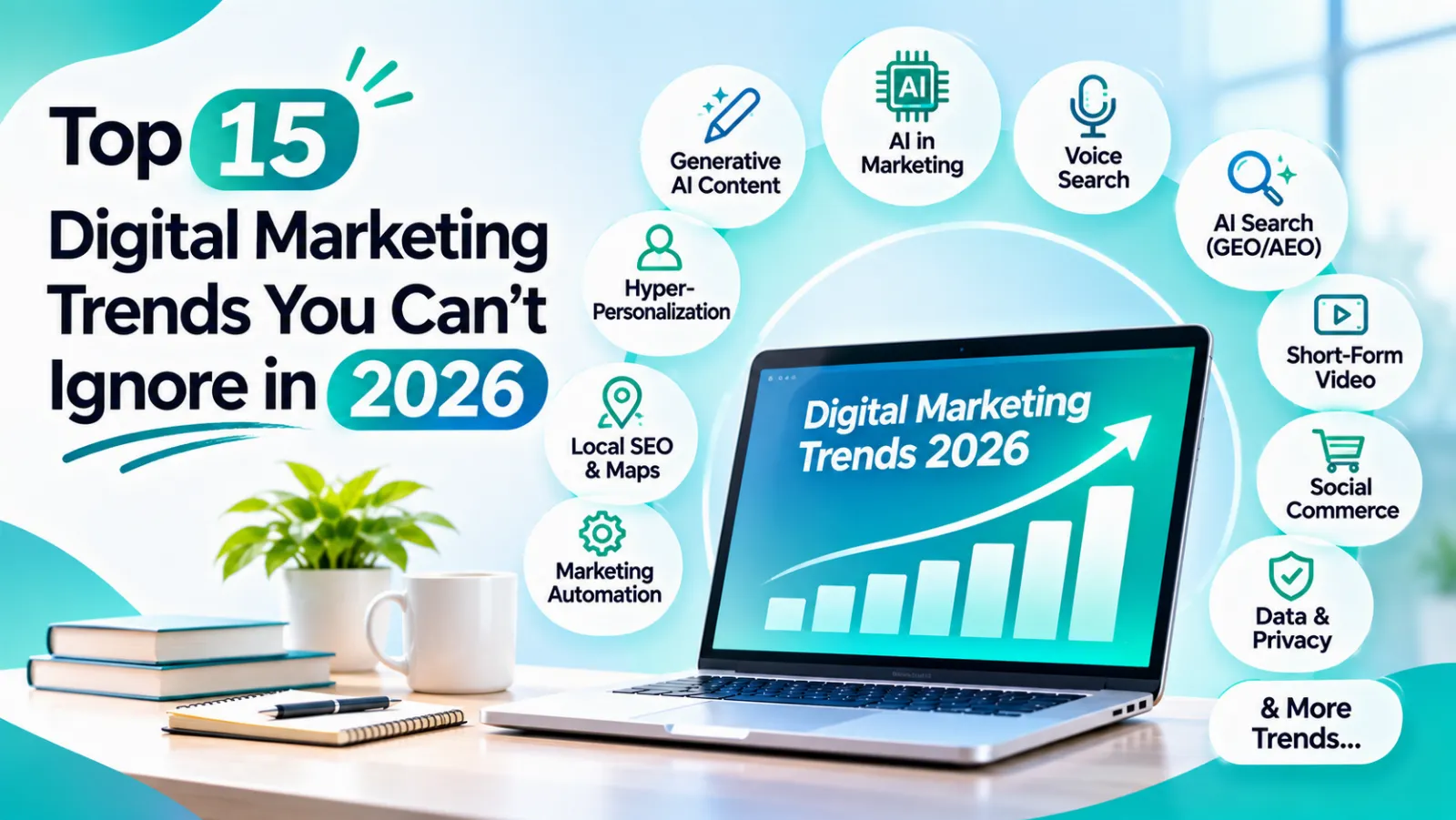
If you run a small or mid-sized business, you don’t need to chase every shiny new thing. You just need to know which digital marketing trends are actually changing how people find, trust, and buy from brands. This guide covers 15 that matter in 2026, with a simple note on what to do about each.
1. AI Is Now Part of the Daily Workflow
AI tools are built into almost every platform you use, from email software to ad managers. Teams use them to draft content, analyze data, and automate repetitive work.
What to do: Pick one task that eats your time and test an AI tool on it. Always review the output yourself, because AI can sound confident while being wrong.
2. Search Is Becoming More Conversational
People increasingly ask full questions instead of typing short keywords, and search engines often show AI-generated summaries above the regular results. Clear, helpful, well-structured content has a better chance of being surfaced.
What to do: Answer real customer questions directly in your content. Use simple headings and short, clear explanations.
3. Short-Form Video Keeps Winning
Reels, Shorts, and TikTok-style videos remain some of the most effective ways to reach new audiences. They don’t need Hollywood production. Authentic, useful clips often outperform polished ads.
What to do: Share quick tips, behind-the-scenes moments, and customer stories. Aim for consistency over perfection.
4. Trust and Authenticity Matter More Than Ever
As AI-generated content floods the internet, people are getting better at spotting generic, soulless material. Real faces, real stories, and real experience stand out.
What to do: Show your team, share genuine results, and write in your own voice. This is one of the strongest online marketing advantages a small business has.
5. Local Search Is Getting More Competitive
More people search for services “near me,” and map results take a big share of clicks. A complete Google Business Profile, fresh reviews, and consistent business details are now basic requirements.
What to do: Update your profile, add photos, and ask every happy customer for a review. If you want expert help improving your visibility in search, you can see how GlanceTechy’s services support businesses of different sizes.
6. First-Party Data Is Replacing Third-Party Tracking
Privacy rules and browser changes continue to limit how much you can track people across the web. Businesses that own their customer data, like email lists and purchase history, are in a much stronger position.
What to do: Build your email and WhatsApp lists, and offer something valuable in exchange for sign-ups. Be clear about how you use people’s data.
7. Personalization Is Expected, Not Optional
Customers expect messages that feel relevant to them. Generic blasts get ignored. Even simple personalization, like mentioning the product someone viewed, can lift results.
What to do: Segment your email list by interests or behavior, and tailor offers accordingly.
8. Marketing Automation Is Becoming Smarter
Automation has moved beyond simple “if this, then that” rules. Modern tools adjust timing, score leads, and trigger follow-ups based on behavior.
What to do: Start with the basics: a welcome email sequence, an abandoned cart reminder, and an instant lead auto-reply.
9. Influencer and Creator Marketing Is Going Smaller
Big celebrity campaigns are giving way to micro and nano creators with smaller but more loyal audiences. People trust recommendations from voices they feel are real.
What to do: Look for local creators or niche experts whose followers match your customers. Focus on genuine fit, not just follower counts.
10. Social Media Is Turning Into a Search Engine
Many people, especially younger users, now search on Instagram, YouTube, and TikTok to find products, restaurants, and services. Your social content needs to be easy to discover.
What to do: Use clear captions, relevant keywords, and descriptive profiles so your content shows up when people search.
11. Messaging Apps Are Becoming Sales Channels
WhatsApp and similar apps are now a normal way for customers to ask questions, get quotes, and even complete purchases. In India especially, many people prefer messaging over calling or filling out forms.
What to do: Add a WhatsApp button to your website, reply quickly, and use saved responses for common questions.
12. Community Building Beats One-Way Broadcasting
Brands that create spaces for conversation, such as groups, forums, and events, build stronger loyalty than brands that only post promotions.
What to do: Start small. A customer group, a monthly Q&A, or a simple newsletter that invites replies can go a long way.
13. Voice and Visual Search Are Growing
People are using voice assistants and tools like Google Lens to search without typing. This favors businesses with clear, natural-language content and good-quality images.
What to do: Write the way people speak, and add descriptive names and alt text to your images.
14. Website Experience Directly Affects Results
Speed, mobile usability, and ease of contacting you now influence both rankings and conversions. A slow or confusing site loses leads no matter how good your ads are.
What to do: Test your site on your own phone, compress images, shorten forms, and make your call to action obvious.
15. Measurement Is Shifting to Real Business Outcomes
Likes and impressions are losing importance. Smart businesses track leads, sales, cost per customer, and return on investment instead.
What to do: Set up conversion tracking for calls, forms, and purchases before you spend more on any channel.
What These Marketing Trends 2026 Have in Common
Look closely and a pattern appears. Technology is getting faster, but trust is becoming scarcer. The marketing trends 2026 will reward businesses that combine smart tools with real human value: honest content, quick responses, and a good experience at every step.
You don’t need to adopt all 15 trends. Choose the two or three that match your customers and your current weak spots. For most small businesses, that means a strong local presence, a website that converts, and a simple follow-up system.
How to Choose Which Trends to Follow
A quick way to decide:
- Ask where your customers spend time. Follow them there, not wherever the hype is.
- Fix the basics first. A trendy campaign on a slow website wastes money.
- Test small. Run a one-month experiment before committing a big budget.
- Measure honestly. Keep what brings real leads and drop the rest.
- Stay curious. Review your strategy every quarter, since things change quickly.
If you’d like help building a practical plan around the trends that suit your business, you can learn more about GlanceTechy and how we help brands grow online.
Final Thoughts
The most important digital marketing trends of 2026 aren’t really about technology. They’re about people: how they search, what they trust, and how they prefer to talk to businesses. Tools will keep changing, but the goal stays the same, which is to be helpful, visible, and easy to reach.
Pick a few trends that fit your business, start small, and let real results guide your next move. Steady, thoughtful online marketing will always beat chasing every new buzzword.