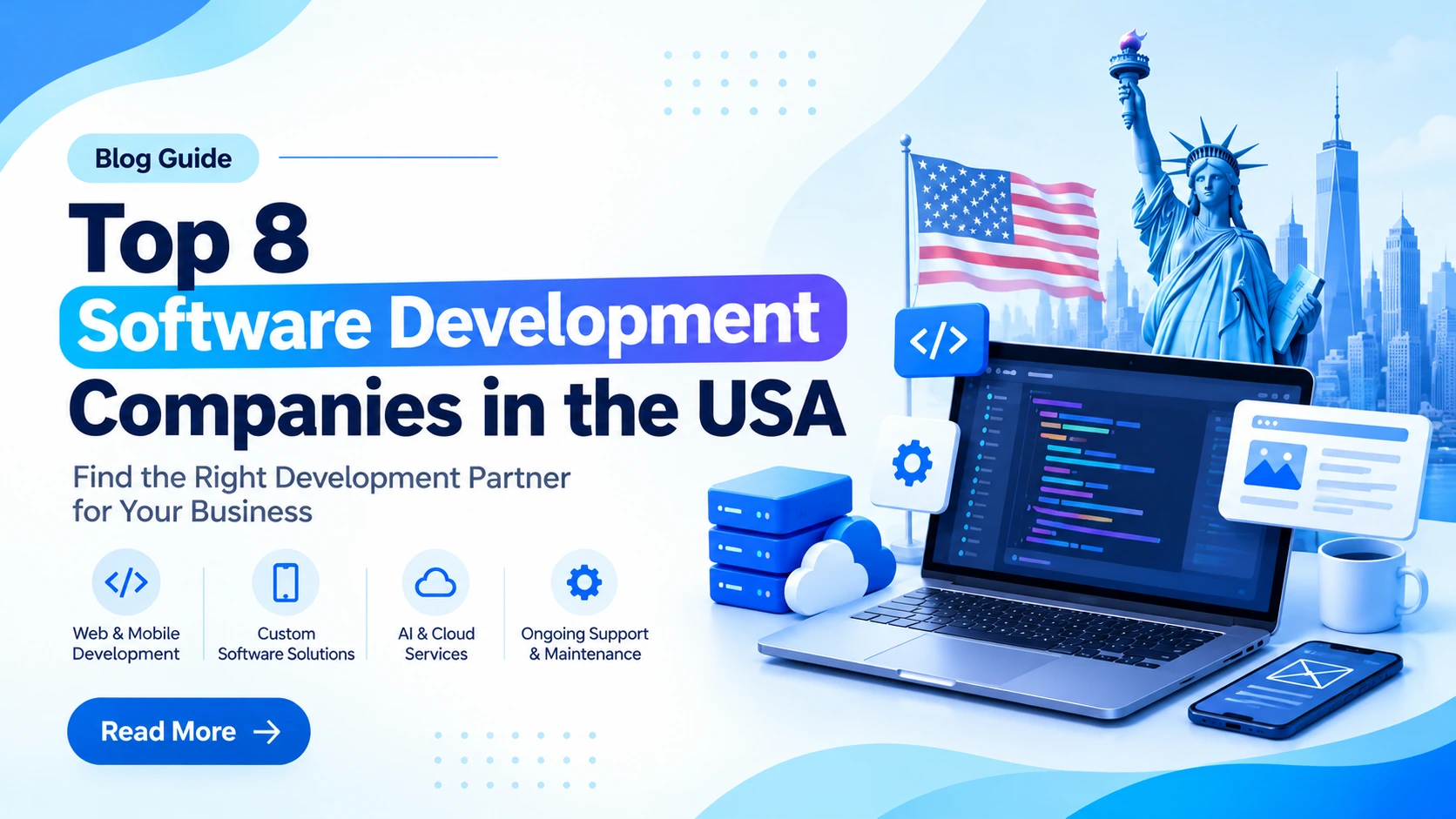
Top 8 Software Development Companies in the USA
Compare eight US software development companies: Goji Labs, Pell Software, Six Feet Up, Designli, Atomic Object, Simform, Plego, and Orases. Learn their specialties and how to choose a partner based on experience, security, pricing, code ownership, and post-launch support.
The challenge is that software development companies often offer similar services, but their strengths can be very different. Some are experienced in helping startups turn an idea into a working product. Others focus on business automation, enterprise applications, artificial intelligence, or improving older software systems.
Choosing the right partner depends on what you want to build, how your business operates, and the kind of support you will need after launch. A company that is perfect for a startup MVP may not be the right choice for a complex enterprise platform.
In this guide, we look at eight software development companies in the USA, their areas of expertise, and the types of projects they may be suitable for. These companies are not ranked from best to worst. Use this list as a starting point for your research and shortlist.
How We Selected These Companies
We focused on companies that develop software for other businesses rather than companies primarily known for selling their own products. The selection considers their publicly described services, areas of specialisation, headquarters, and available project case studies.
We have also considered publicly available client feedback and service information. Company details, team structures, and service offerings can change, so it is always worth checking the latest information directly with each company before making a decision.
Top 8 Software Development Companies in the USA
1. Goji Labs: Best for Product Strategy, Design, and Development
Based in Los Angeles, California, Goji Labs brings product strategy, user experience design, and software engineering together. The company works on web applications, mobile apps, custom software, and AI-powered products, making it an option for businesses that need help shaping an idea as well as building it.
This can be particularly useful for startups and growing businesses. For example, a company planning a new customer platform may need to identify its target users, decide which features are essential, and design the user journey before development begins. Having strategy, design, and engineering handled by one team can help keep those decisions connected.
Goji Labs is worth considering if you want support from the early planning stage through development. Review its project portfolio and ask how the team approaches discovery, user testing, and improvements after launch.
2. Pell Software: Best for Custom Business Systems and Workflow Automation
Pell Software, based in Denver, Colorado, focuses on building software around the way a business operates. Its services include custom CRM and ERP systems, APIs, dashboards, workflow tools, and web portals.
Many businesses rely on several separate tools to manage sales, inventory, customer information, and reporting. When these systems do not communicate properly, employees may end up entering the same information multiple times or relying on manual processes. A custom solution can bring important workflows together and reduce repetitive work.
Pell Software may be worth exploring if standard business software does not properly support your processes. Before choosing custom development, ask which existing platforms can be integrated, which features genuinely need to be built from scratch, and how the finished system will be maintained.
3. Six Feet Up: Best for Python, Data Engineering, and AI Projects
Six Feet Up is a software consultancy based in Fishers, Indiana, with a strong focus on Python development. Its work also covers data-heavy applications, cloud technologies, machine learning, and artificial intelligence, including projects involving large language models.
This kind of technical experience matters when a project involves more than building a standard website or application. An AI-powered product, for example, may need data preparation, model integration, testing, security controls, and ongoing performance monitoring. Each part needs to work together if the final product is going to be reliable.
Six Feet Up may be a good fit for businesses developing Python-based applications, working with complex data, or exploring practical AI solutions. Ask for examples that closely match your technical requirements and discuss how the team handles data quality, testing, and security.
4. Designli: Best for Startups and First-Time Founders
Turning a business idea into working software can be difficult, especially when the founder does not have a technical background. You may understand the problem you want to solve, but deciding which features to build first, what technology to use, and how to plan the development process can feel overwhelming.
Designli, based in Greenville, South Carolina, focuses on custom software and digital product development. Its process covers early product discovery, design, and engineering, making it relevant to founders who need help moving from an idea to a usable product.
One area worth discussing with a company like Designli is MVP development. A minimum viable product is not simply a smaller version of a complete application. It should include the essential features needed to test whether the idea solves a real problem for users.
Designli is worth considering if you are a non-technical founder looking for a structured development process. Before signing, clarify what is included in discovery, what deliverables you will receive, and who will own the source code and design files.
5. Atomic Object: Best for Complex Software and Modernisation
Atomic Object is a software design and development consultancy headquartered in Grand Rapids, Michigan. It works on custom software products, existing application improvements, and software modernisation.
Not every project starts with a blank page. Some businesses already have applications that customers and employees depend on, but the technology has become difficult to maintain. The system may be slow, difficult to update, or unable to support new business requirements. Replacing or improving that software requires careful planning because existing operations cannot simply stop while the work is happening.
Atomic Object has published project case studies, including work involving digital health technology used to help hospitals track medical supplies. This illustrates the type of challenge where reliability and maintainability matter just as much as adding new features.
The company may suit businesses that need careful custom engineering or want to improve an existing software product. Ask how the team evaluates older systems, plans migrations, reduces disruption, and documents the work.
6. Simform: Best for Enterprise Engineering and Team Extension
Simform offers a broad range of technology services, including custom software development, AI, cloud engineering, enterprise application modernisation, mobile development, and IT staff augmentation. The company is headquartered in Orlando, Florida.
One important thing to understand about Simform is its delivery model. Some businesses need a development partner to take responsibility for a complete project, from planning through deployment. Others already have an internal engineering team but need additional developers or specialists to increase capacity.
These arrangements involve different responsibilities. With a complete project engagement, the scope, milestones, and delivery ownership should be clearly defined. With staff augmentation, your business will generally remain more involved in managing the developers and day-to-day priorities.
Simform may be worth considering if you need broad engineering capabilities or additional development resources. Before moving forward, clarify who will manage the work, how developers will be assigned, and what happens if your project requirements or staffing needs change.
7. Plego: Best for Custom Software, AI, and Cloud Solutions
Plego, based in Chicago, Illinois, provides custom software development alongside web development, AI services, and cloud consulting. Its work covers different industries and types of business applications.
This range can be useful when a project involves several connected components. For example, a business application may need a web interface, a central database, third-party integrations, and an AI-powered feature. Working with a team that understands how these parts fit together can make development and future maintenance easier.
However, a company offering several technology services does not automatically have the same level of experience in every area. It is important to understand who will work on your project and whether they have delivered similar solutions before.
Plego is worth exploring if you need custom software that combines application development with AI or cloud requirements. Ask for relevant case studies and discuss which parts of your project the team has handled previously.
8. Orases: Best for Custom Business Applications and Software Modernisation
Orases is based in Frederick, Maryland, and focuses on custom software development, business applications, and digital strategy. Its work includes solutions such as custom web portals, application migration, and software designed around specific business requirements.
As a company grows, the tools it uses may no longer be suitable. A business might need a customer portal, a supplier management platform, or a replacement for an older application that has become difficult to maintain. In these situations, custom software can help connect different processes and make everyday operations more efficient.
The important thing is to understand the actual business problem before deciding what needs to be built. Adding more features or creating a larger system does not necessarily make a solution better. The software should make work easier, improve access to information, or solve a clearly identified problem.
Orases may be a good option for businesses considering a tailored operational platform or a software modernisation project. Ask for case studies related to your requirements and clarify how security, testing, documentation, and ongoing support will be managed.
Quick Comparison of the Top 8 Companies
Company | Main area of focus | Consider it for |
|---|---|---|
Product strategy, design, and development | Building a new digital product | |
Pell Software | Business systems and integrations | Workflow automation |
Python, data, and AI | Data-heavy applications | |
Designli | Product discovery and development | Startup MVP development |
Atomic Object | Custom engineering and modernisation | Complex or older applications |
Simform | Engineering services and team extension | Scaling a development team |
Plego | Custom software, AI, and cloud | Multi-part software solutions |
Orases | Custom business software | Tailored business applications |
These companies work on different types of projects, and some offer services beyond the areas listed here. Use the comparison to narrow your options rather than treating it as a final ranking.
How to Choose the Right Software Development Company
Even if a company has an impressive portfolio, that does not automatically mean it is the right partner for your project. The most important thing is finding a team that understands your requirements and can deliver a solution that fits your business.
Before making a decision, consider the following points.
1. Understand Your Business Requirements
Start by identifying the problem you want the software to solve. Think about who will use it, what tasks it should make easier, and what results you expect from it.
For example, if you want to build an inventory management system, list the essential features such as stock tracking, order management, reporting, and user access. Having a clear idea of the requirements will help development companies provide more accurate proposals.
2. Check Their Previous Projects
A company's portfolio is one of the best ways to understand its development experience. Look for projects with similar functionality, technical complexity, or business requirements.
Do not just look at screenshots or project descriptions. Ask what role the company played, which technologies it used, and what challenges it solved. A relevant case study can tell you much more than a long list of services.
3. Understand Their Development Process
Before hiring a company, understand how it manages a project. Ask whether it starts with discovery and planning, how designs are reviewed, how development progress is shared, and how changes are handled.
You should also know who will be responsible for project management and technical decisions. A clear process makes it easier to track progress and avoid misunderstandings.
4. Ask About Security and Software Quality
Security should be considered from the beginning, especially if your software handles customer information, payments, or confidential business data.
Ask about code reviews, automated testing, access controls, backups, documentation, and security updates. If your business operates in a regulated industry, discuss the relevant compliance and contractual requirements before development starts.
5. Confirm Source Code Ownership
Your software is a business asset, so make sure the agreement clearly explains who owns the source code, design files, documentation, and other deliverables.
You should also have the necessary access to code repositories, hosting accounts, and third-party services. This gives your business the flexibility to maintain or move the software to another development team in the future.
6. Compare Project Costs Properly
Do not choose a company based only on the lowest quotation. One proposal may include planning, design, testing, deployment, and maintenance, while another may cover development alone.
Compare proposals using the same project scope. Check the payment milestones, delivery timeline, exclusions, additional charges, and ongoing support costs. This will help you understand the actual investment required.
Questions to Ask Before Hiring a Software Development Company
Before signing an agreement, have a detailed discussion with the development team. These questions can help you understand whether the company is a suitable partner:
Have you completed projects with requirements similar to ours?
Who will work on our project, and who will manage the team?
What development technologies do you recommend, and why?
How will we review progress and approve changes?
What testing and security practices are included?
Who will own the source code and project deliverables?
Do you provide maintenance and technical support after launch?
What happens if the project scope, budget, or timeline changes?
A reliable company should be able to explain its answers clearly. Important responsibilities, deliverables, and ownership terms should also be included in the proposal or contract.
Why Businesses Need Custom Software Development
Ready-made software works well for many everyday business requirements. Accounting platforms, CRM tools, project management applications, and e-commerce systems can save time and reduce development costs.
However, standard software does not always match the way a particular business operates. A company may have unique approval processes, complex reporting requirements, or several systems that need to share information.
Custom software development can help address these challenges by creating applications around specific business needs. This might include a customer portal, an internal management dashboard, an automated reporting system, or a platform that connects multiple business applications.
The decision should always start with the problem. If an existing product can solve your requirement effectively, custom development may not be necessary. But when standard tools create limitations or manual work, a tailored solution may be worth considering.
Don't Forget About Your Software's Online Visibility
Developing useful software is an important achievement, but people also need to discover it. Whether you are launching a SaaS platform, a business application, or a software development service, your online presence can influence how potential customers find and evaluate your product.
A professional website, helpful content, search engine visibility, and a clear digital marketing strategy can help attract the right audience. Businesses should think about these activities alongside product development rather than waiting until everything is launched.
If you want to improve your website's search visibility, explore GlanceTechy's SEO services. You can also visit GlanceTechy to learn more about its website design, web development, and digital services.
Final Thoughts
Choosing the right software development company takes more than comparing names and service lists. You need to understand what each company does well, whether its experience matches your project, and how it will support your business after delivery.
Goji Labs and Designli may be worth exploring for businesses developing new digital products. Pell Software focuses on business systems and workflow automation, while Six Feet Up brings experience in Python, data, and AI. Atomic Object is relevant for complex engineering and software modernisation, Simform offers broad engineering services and team extension, and Plego and Orases work across custom software and business applications.
The best choice will depend on your requirements, budget, timeline, and long-term plans. Shortlist two or three companies, review their case studies, speak with their teams, and compare detailed proposals before making your decision.
A good development partner should not simply build what you ask for. It should help you understand the problem, make practical technical decisions, and create software that delivers lasting value to your business.
Frequently asked questions
A software development company plans, designs, builds, tests, and maintains software applications. Depending on its services, it may develop websites, mobile applications, enterprise platforms, business management systems, APIs, and custom software solutions.
The cost depends on the project's complexity, features, technology, integrations, and development team. A basic business application will generally require a smaller investment than a large enterprise platform. Request a detailed quotation based on your requirements rather than relying on a general price estimate.
A smaller application may take a few months, while complex enterprise software can take considerably longer. Planning, UI/UX design, development, testing, integrations, and deployment all affect the timeline.
Ready-made software is developed for a broad range of users and usually offers standard features. Custom software is built around the specific requirements of a business. It can provide greater flexibility but may require a higher initial investment and ongoing maintenance.
Review the company's portfolio, technical expertise, client feedback, development process, pricing, and support arrangements. Also confirm source code ownership and make sure the company has experience with requirements similar to yours.
The technology depends on the type of application. Common choices include JavaScript, TypeScript, Python, Java, C#, PHP, React, Node.js, .NET, and cloud platforms such as AWS and Microsoft Azure.
Many companies offer maintenance and support after deployment. This may include bug fixes, security updates, performance improvements, compatibility changes, and new features. Always confirm which services are included in your agreement.
Yes. Small businesses can use custom software to automate repetitive tasks, manage customers, organise operations, and connect different tools. However, it is important to compare the cost of custom development with existing software before making a decision.
MVP stands for Minimum Viable Product. It is an initial version of a product that includes the essential features needed to solve a problem and gather feedback from real users. Businesses use MVPs to test ideas before investing in a complete product.
Software maintenance helps keep an application secure, reliable, and compatible with changing technologies. Regular updates can fix bugs, improve performance, address security issues, and introduce features as business requirements evolve.